Friday, April 30, 2010

Test Questions

1. What was scandalous about the death of Father Zossima? The odor of corruption

2. Who is Smerdyakov's mother? Stinking Lizaveta

3. What are two of the great lessons of Father Zossima? Everyone is responsible for everyone else. Paradise is everywhere (not geography, but mental)

4. Who actually murdered Old Man Karamazov? Smerdyakov

5. How did Smerdyakov die? He hanged himself

6. What are the court scenes depicting? The corrupt questioning of the western legal system

7. Grand Inquisitor - parable about Christ returning to earth again to give human kind free will. He is arrested again and is executed again because people want to be told what to do by the church through miracles

8. How does each brother contribute to the death of Old Man Karamazov?
Smerdyakov - killed him
Dmitri - wanted to kill Fydor
Ivan - gave ideas that he approved of it
Alyosha - did nothing to prevent it

9. What was the evidence that convicted Dmitri? Katerina's letter

10. Which character in the novel is critical of Alyosha but later becomes his disicple? Koyla

11. Who did Anne see as the tragic hero of the novel? Ilyusha

12. Who did Hamlet accidentally kill behind the curtain? Polonius Who did he think was behind the curtain? Claudius

13. Who is the only other character that can compare to the wit of Hamlet? The grave digger

Wednesday, April 28, 2010

The Last Blog

I wonder where the time has gone. It seems to be just the other day I was typing up the first blog. However, everything has to come to an end eventually. Fortunately, the experiences leading all the way up to this final blog I can treasure a time beyond this point. The class experience has been a good one with many shares of laughs and most importantly knowledge. I feel my way of thinking about and interpreting literature have been widened a great deal. I must have been partially blind before not to have really acknowledged that there are no original stories, only retellings. It's not that I didn't already make connections between obvious similarities between novels, art, music, ect. It's hard to explain. All I can say is that it has more to do with what I know now that I didn't know before. Unfortunately, I'm low on time to express all the things I've learned as much as I would have liked to. In short, I've enjoyed the class and the adventure has given me much to treasure beyond the upcoming last day of class.

My Paper

The True Judge
The illustration of injustice is retold continually throughout The Brothers Karamazov: Snegiryov’s beating, the patron’s murder of the widow, the wrongful conviction of Dmitri, ect. These instances of crime are articulated as an offense against God, in which the man-made, legal system fails to prosecute justly. The courts are nothing more than a mockery of justice as emphasized in the consistency of wrongful convictions and unresolved injustices. Where society is unable to effectively punish criminals, the role of religion becomes important to impose the guilt to uncover the true judge. For the only judge able to deliver effective punishment throughout the novel is found in the conscience.
The jurisdiction of man is emphasized as unjust first with the anecdote of Father Zossima’s mysterious visitor and again in Dmitri’s trial. Dostoevsky heavily conveys how assumptions of the court are created on the feeble foundation of circumstantial evidence and unreliable witnesses in both cases of crime. The philanthropist was able to escape detection due to the circumstances of rising suspicion against one of the widow’s serfs, Pytor. The serf was tried for murder based only on circumstantial evidence and witnesses proclaiming his threats of murder. Although Pytor died before his trial reached a jurisdiction, the court and townspeople remained convinced he was guilty and investigated no further into the murder. A similar injustice reoccurred in Dmitri’s trial. The court was heavily influenced to falsely accuse Dmitri on the basis of false statements and the circumstantial evidence the lawyers greedily gathered from unreliable witnesses and Dmitri, himself.
The judgment of man is not only proven unjust, but unable to reform the convict. As Father Zossima explained in book two, chapter five, “mechanical punishment…only embitters the heart” and proceeds to turn the wrongdoer against society. The punishment Kolya inflicted upon Ilusha only succeeded in hardening the young boy into a threat to society. The court’s sentences of hard labor and prior flogging only seemed to increase the number of crimes. Father Zossima further claimed that the only effective punishment is rooted “in the recognition of sin by conscience” (p 66).
The felons in the novel only confirm Zossima’s claim. Years after the patron murdered, his conscience began to trouble him. He suffered in silence for fourteen years haunted by the blood he had shed. At first he thought of suicide, but his resolution was to admit to his crime. He admitted he accepted continuing his agony if only to spare his wife and children from the truth. Although Father Zossima had been there to help the patron to confess, the philanthropist’s conscience had already decided what he was to do. Dmitri is another example of Zossima’s assertion.
Twice Dmitri faced the faced his conscience. First, after the incident in the garden, Dmitri confessed he must punish himself. Convinced he had taken the life of Grigory, another living creature, his conscience had already decided the punishment to take his own life. Again he faced his conscience before his trial. He comes to acknowledge that although he did not kill his father, he shares a part of the responsibility as well as realize his many other sins. Before the court decided his fate, Dmitri had already come to the conclusion he must suffer through the hard labor in Siberia to redeem himself.
In both cases of criminal activity, it is not the man-made legal system that is able to examine the convict and give punishment justly. Dmitri and the philanthropist under go the process of acknowledging their sins and suffering to find redemption through their conscience. Thus, with the courts unjust and the conscience prevailing to punish and reform, the role of religion becomes more important in the process of finding the true judge.
In book two, Father Zossima’s response to Ivan implies it is through the church that man will find the true judge, the conscience. In recognizing the offense against God, the criminals will realize the offense against society. While society will turn away from the criminal, the church will not judge or deliver a punishment of moral condemnation and offers pity. If the criminal does not recognize himself as a member of the Church he’ll be left in a state of despair with nothing else to lose. The fear of moral condemnation helps to impose a sense of guilt and a desire to find redemption.
The novel emphasizes that man is unqualified to judge one another. The criminal justice system fails to open to the truth of the situations and often harden the heart. The courts are blinded by conclusions entangled in circumstantial evidence and unreliable witnesses as proven with the philanthropist and Dmitri. The church acknowledges that being human, it cannot pass judgment and will only remain friendly to the criminal and offer pity. However, if neither the court nor the church is able to be a just judge for punishment and set a path for redemption, there is little else for the criminal to turn to for judgment. In search for redemption, the criminal’s conscience becomes the only judge on which can be relied for a just punishment.

Tuesday, April 27, 2010

Plagiarism: Is it avoidable

I recall from the first groups presentation an interesting question was brought to the table. Is plagiarism avoidable? I'd have to say this kind of an awkward question to answer. I am leaning toward no, but at the same time a part of me wants to say yes. As we've already discovered there are no original stories...so to me no matter the attempt everything will be a retelling in some way or another. It's gotta be impossible not to plagiarize. After all changing and rearranging words cannot make it your own when the same message has already been said before. Still I lean toward yes only due to the idea of stealing word for word - not a good thing, not that changing and rearranging words makes it any better though. It really can't be possible not to plagiarize when looking at the ideas being repeated...

Tragic Sense of Life 2

So I did a bit of googling on the tragic sense of life and found this particular site: http://www.columbia.edu/~rr322/Tragedy.html

I found it interesting that the tragic sense of life has more to do with internal interpretations and meaning of events rather than external events alone, which I suppose makes sense. It brought to light that tragedy tends to bring about the most common question: "Who am I?" The tragic hero will strive to expand his understanding and sometimes to a hazardous extent. Hamlet consumed my thoughts when I read through this. "To be or not to be?" He practically looses his mind at times trying to figure things out. The only problem with stretching knowledge to uncover truth, is that it is virtually impossible to accomplish. After all the tragic hero goes through and all the risks he/she takes in the end he/she will never really be able to satisfy this quest.

Another Retelling

By chance I came across a sort of retelling of Ivan's rebellion a while ago in the movie A Walk To Remember. The conversation took place between the two main characters Jamie and Landon. It went something like this:

Jamie: This...stuff. I -- I have my beliefs, I have faith, but don't you?

Landon: No. There's too much bad **** in the this world

Jamie: Without suffering there'd be no compassion.

Landon: Yeah, well tell that to those who suffer.

It's only a short bit. The topic was tied into a few other conversations throughout the movie, however I found this particular snippet to be the clearest retelling.

Friday, April 16, 2010

GROUP 6 MEETING

Group 6 members we changed the time from noon to 6 pm at the library on Sunday.

Wednesday, April 14, 2010

Thesis Possibility...

I haven't quite formulated a thesis quite yet...However, an idea I seem to keep coming back to involves a comparison between the two 'fathers' in the novel: Fydor and Father Zossima. The two characters extremely differ in their moral values and both their deaths cause a bit of crisis for the Karamazov brothers.

Wednesday, April 7, 2010

Test Questions

1. What is Father Zossima’s response to Ivan Karamazov’s condemnation?

2. All of the following are positive female archetypes except…Devouring Mother

3. What does ‘chthonic’ mean? Underworld

4. What in the story makes it possible for the town of Omelas to be as perfect as possible? Torture of a small child

5. Memorization – Fahrenheit 451

6. What is the most common argument between a man and a woman? You don’t know what it’s like to be me

7. What does Hera do to Tireisus after his response to her question? Strikes him blind

8. What is the first principle of Buddhism? All is suffering all is fleeting

9. What kind of pet would Garrett not cry over? Fish

10. Does Anton Chekov condemn the characters in his story? No. He does not judge them.

11. The answer to the red wheel barrel questions is the red wheel barrel

12. What archetype would Old Karamazov belong to? Trickster

13. What archetype does Grushanka belong to? Temptress

14. What macabre occupation did Annabelle belong to? Restoration manager

15. In a short story, a man puts his hand over that of a blind man to help him draw. What do they draw? Cathedral

16. What law does Antigone represent? The laws of the Underworld.

17. Professor Sexson has a colleague that travels, but does not…read

18. What poem lit up the professor’s face like a child on Christmas day? The one on the door: before you leave the classroom please turn off the lights, close windows, put desks back, pick up garbage

19. What is the difference between metaphor vs simile?

20. What is theodicy? An attempt to justify a god that permits suffering in the world.

21. Who in the Cathedral is the only one who has a name? Blind Man

22. How did Antigone die? She hanged herself

23. What is the object that made Dmitri in the Lady with the Pet Dog have an epiphany? Sturgeon

24. Who is the tragic hero in Antigone? Creon or Antigone

25. What is the Grand Inquisitor’s secret? The church has corrected the problems that Jesus had brought to the world. The church created miracle, mystery, and authority according to a character in Brother’s Karamazov. Freedom is the secret word.

26. Cliff notes are inadequate for Brother’s Karamazov

27. What does misogynist mean? Women Hater – Creon “There are other fields to plow”

28. Shakespearean vs Italian sonnet

29. Araby: Who was the one who inspire the boy to go to the marketplace? Mangan’s sister

30. Which character seems to “run away” from the author in the Brother’s Karamazov? All of them

31. In Antigone, who represents the gods of the upper world? Creon

32. Sonnet Therapy - "I wrote these poems to help people live their lives."

33. Foil - character in contrast to another to create tension in the work. Ex. Creon and Antigone

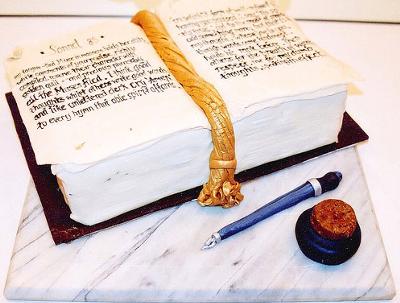
Sunday, April 4, 2010

Tragic Sense of Life

I cannot honestly say I've had a bad day that has ever been darker than a day close to eight years ago. It was into the later days of summer vacation. I was enjoying yet another day of freedom, sinking into the cushions of the couch as I watched television with my younger siblings. My happy laziness was short lived, however, by a phone call that plunged my day and more to pass into a morbid darkness. A classmate delivered the news of a horrific car accident that had taken place in Montana only earlier that very day. A good friend of mine had been a passenger in one of the cars involved in the head-on-collision. While the other victims of the crash were able to walk away, my friend had died upon impact. Being age twelve at the time, it was the last thing I had ever expected or wanted to hear. I felt a great deal of sadness not only for the loss of my friend, but for her mother as well. Her only daughter had been taken away from her at such a young and innocent age. I could not even begin to fathom how much anguish and grief her mother was going through.

Friday, March 12, 2010

Found Poem

Inspiring line from precalc book: The "inverse-reverse" method is also known as "doing and undoing." The name "inverse-reverse" is short for "inverse operations in the reverse order."

Resulting poem:

Inverse
Reverse
Operations in order
Inverse
Reverse
short method
doing and undoing
Inverse
Reverse
Inverse
Reverse

Sonnet

Within your body no heart will be found
And yet it is you who can mark the time
To the beat of my heart within me bound
As though given talents of that of mimes.

Your voice of six strings knows no human words
Only chords of comfort when heartaches yearn
For temperate melodies of whisp’ring birds
When left in clutches of forlornness’ burn.

My hand on your neck and body in lap,
Let us be one when my fingers strum soft
So we flow in meter with one’s foot tap
And tune your voice to that of blue hearts oft.

For you, my sweet guitar, are heartbreak’s guide
To light of peace when you are by my side.


I know that my iambic pentameter is likely to be off and this is obviously not to a significant other or pet, but I do hope you enjoyed.

Friday, March 5, 2010

Shakespearean Sonnet


Two elements need to be considered when writing a Shakespearean sonnet: the experience (or message) within the words and the form to express that experience (or message).

A Shakespearean sonnet contains several key elements that should be present in it's form.
- Composed of 3 quatrains and ending in a couplet
- Each quatrain develops a specific idea related to the ideas in the other quatrains
- The rhyme scheme: abab cdcd efef gg.
- All lines written in iambic pentameter. 10 syllables per line. A suggestion from the website referenced above is to read The Bard aloud to pick up on the short LONG short LONG short LONG short LONG short LONG pattern of proper iambic pentameter. Iambic pentameter means 5 feet per line, written in iambs, with the accent on every second syllable. A foot representing a 2 syllable group of words with the second syllable of each pair accented. ("my SOUL does CRY") It's suggested to be careful when using trochees (type of metric foot where the natural stress falls on the first syllable as in DY-ing), anapests (word or word group with the accent falling on the third syllable as in uncontrolled or underneath) or dactyls (word or word group with the accent falling on the first syllable as in harmony or melody).

Sunday, February 28, 2010

Scapegoat


Dictionary Definitions:
1. a person made to blame for wrong doings, mistakes, or faults of others for reasons of convenience.
2. (biblical, Lev. 16) goat sent into the wilderness after the chief priest symbolically laid the sings of the people upon it.

Scapegoating can also be a way to shift responsibility onto someone else. After a bit of googling, scapegoating is a psychological defense mechanism for those in denial of blame or responsibility.

Lord Raglan's Hero Pattern

1. Hero's mother is a royal virgin;
2. His father is a king, and
3. Often a near relative of his mother, but
4. The circumstances of his conception are unusual, and
5. He is also reputed to be the son of a god.
6. At birth an attempt is made, usually by his father or his maternal grand father to kill him, but
7. he is spirited away, and
8. Reared by foster -parents in a far country.
9. We are told nothing of his childhood, but
10. On reaching manhood he returns or goes to his future Kingdom.
11. After a victory over the king and/or a giant, dragon, or wild beast,
12. He marries a princess, often the daughter of his predecessor and
13. And becomes king.
14. For a time he reigns uneventfully and
15. Prescribes laws, but
16. Later he loses favor with the gods and/or his subjects, and
17. Is driven from the throne and city, after which
18. He meets with a mysterious death,
19. Often at the top of a hill,
20. His children, if any do not succeed him.
21. His body is not buried, but nevertheless
22. He has one or more holy sepulchers.

Taken from http://department.monm.edu/classics/courses/Clas230/MythDocuments/HeroPattern/default.htm

Friday, February 26, 2010

Female Archetypes

The Boss - 'takes charge female' that demands respect and must reach her goals
The Survivor - sizes up everyone in the room, mysterious, manipulative, hides her distrust, cynical
The Spunky Kid - team player always willing to help, many friends and no enemies, supportive and reliable
The Free Spirit - happy-go-lucky, follows her heart, playful
The Waif - damsel in distress, pure of heart, strong will
The Librarian - passionate, well mannered, smart
The Crusader - headstrong, no time to waste, nothing will stop her from accomplishing her mission
The Nurturer - cares for everyone, good listener, optimistic, peaceful, laid-back

These eight female archetypes were found at http://www.likesbooks.com/78.html

people.sinclair.edu/mildredmelendez/docs/267/lecture05.pdf - this pdf provides archetypes similar to those we discussed in class and many more.

Tuesday, February 23, 2010

Love Is Blind

Throughout the majority of Araby, the narrator is ignorant of his stagnant neighborhood and bitter home. He's too infatuated or twitterpated with Mangan's sister to notice anything else. For the narrator, Mangan's sister is a light, as he constantly describes her figure being defined by some light source, that blinds him from seeing the darkness of reality. It is a gloomy epiphany that strikes the narrator during his mission to travel to the bazaar to acquire a gift for his love. His first taste of reality is with his uncle. Too self-centered and drunken, his uncle forgot his nephew was waiting for him to come home from work to go to the bazaar. The epiphany hits the narrator full on at the bazaar. A young lady speaks to him "out of a sense of duty" in which the narrator finally observes reality. Walking through the darkened hall he realizes his fantasies and dreams of Mangan's sister are childish. He saw himself as "a creature driven and derided by vanity" only further proving he is seeing the world at a more mature level.

It reminds me of the song "Change Your Mind" by the Killers.

Racey days
Help me through the hopeless haze
But my oh my
Tragic eyes
I can't even recognize myself behind
So if the answer is no
Can I change your mind

Out again, a siren screams at half past ten
And you won't let go
While I ignore, that we both felt like this
Before it starts to show
So if I had a chance
Would you let me know

Why aren't you shaking
Step back in time
Graciously taking
Oh your too kind

And if the answer is no
Can I change your mind

We're all the same
And love is blind
The sun is gone
Before it shines

And I said if the answer is no
Can I change your mind

Although the context is slightly different it is another example of how love is blinding.

Wednesday, February 17, 2010

Quiz Preperations

1. Arnold Friend is…
a. The Devil
b. The Demon Lover
c. The Imagination
d. ALL THE ABOVE AND ALL THAT

2. Grim vs Perrault
– Grimm is more grotesque than Perrault. The Perrault ends with the moral of the story (cautionary warning). The Grimm story ends with the woodsman shooting the wolf and opening his stomach to let the grandmother and Little Red Cap jump out.
Be familiar with the endings of both stories

3. What words means twisted, cruel, ugly, alienated, or deformed? – Grotesque

4. What is the difference between Smooth Talk and Where Are You Going Where Have You Been?
Oates – implies ambiguity since Connie doesn’t return after joining Arnold Friend in the jalopy Film – Connie returns from the 'initiation' and dreamily dances to a song with her sister

Report what the story actually says instead of what you infer.

5. What’s the difference between the lady in the Demon Lover and Connie in Joyce Carol Oates’ story?
– Woman is a wife and mother, giving up her husband and children to go off with a guy she knew years ago. Know what the woman and Connie are giving up.

6. Archetype
– image or pattern that is repeated in literature and fantasy

7. Who did Joyce Carol Oates say she dedicated her story to?
– Bob Dylan “It’s All Over Now Baby Blue”

8. Why was Lot’s Wife turned into a pillar of salt?
– She looked back as the city was destroyed

9. Who said, “Tell the truth, but at a slant.”
- Emily Dickinson

10. Because I Could Not Stop For Death He Kindly Stopped For Me
– Death is portrayed as a courtly, elegant suitor taking her to his home, "a swelling in the ground"

11. Slanting rays of the setting sun is the...
– 1st memory Alyosha has of his mother

12. Even though Alyosha is saintly he is infected by the Karamazov curse. What is the curse?
– Sensuality, libido

13. Three Karamazov brothers represent...
Dmitri – (man of the earth) brash, primal, action military man, acts without thinking
Ivan – (man of mind) intellectual, rationalist
Alyosha – (man of spirit) saintly, idealistic

14. What is anamnesis?
- recollection, remembrance of the past (memory/dream assignments?)


That's all the questions (that may be tweaked by Professor Sexson) that were discussed in class, but not everything that we'll be accountable on the quiz Friday. Anything that was discussed in previous classes are likely to be on the quiz. Here's a list I recall talking about in class:

Shahrazad - woman who told stories with cliff hangers every night to live another day
Pied Piper of Tucson
Death and the Maiden painting
Hades and Persephone
in Just- by e. e. cummings
Eros and Psyche - Pysche means soul - Eros/Cupid means love - she fell in love with love
3 versions of Cinderella
Fall of Icarus - story and painting
Disillusionment at 10 O'Clock - "old man drunk and asleep in his boots catches tigers in red weather"
Happy Endings - death is the ultimate conclusion of stories
Three steps for a hero's story -
1. separation - hunky dory, in the womb
2. initiation - puzzlement/fear/pain/belly of the beast
3. return - restoration
The moral of the story is the story itself, the experience of the story
The Sin of Adam and Eve - the fault is feliz culpa (blessed fault/fortunate fall)
Possibly the Lottery? The Old Man With Enormous Wings? and the Little Red Riding cluster

I believe I recall Professor Sexson mentioning that the simile he found most grotesque - "Behind them the line of woods gaped like a dark open mouth" - from A Good Man Is Hard to Find may be quiz material as well.

Tuesday, February 16, 2010

Clinging To His Neck Like A Caterpillar

Can you imagine that? A cat clinging to your neck like a caterpillar? Being familiar with cats I have a strong intuition that there would be a great deal of pain if a cat were to be wrapped around your neck in such conditions. Given the choice, a caterpillar's soft, sticky legs would be greatly appreciated over a cat any day. Toss a cat about and you've got a sticky kitty. Pitty Sing likely dug his claws into Bailey's shoulder and neck as he hung on for life while the car rolled. That had to hurt although the story doesn't directly express what pain Bailey had to have felt.

Thursday, February 4, 2010

Don't Look!

As we discussed in class Wednesday, humans have a knack for stealing a peek when they're told not to look. A few examples were The Wizard of Oz and Medusa. I happened to think of the myth of Eros and Psyche we were most recently assigned. The mysterious husband of Psyche had but one rule: Not to look upon his face. Of course as expected, Psyche steals a glance at night and is caught in the act by her husband Eros. The consequence reminded me of the Grimm Brothers' Cinderella. Aphrodite assigned tasks for Psyche, each of which Psyche completed with help secretly from Eros in various forms. Speaking of Aphrodite, doesn't her jealousy of Pysche's beauty remind you of Snow White?

Overall though, the story seemed closer to Beauty and the Beast. There are multiple versions of this myth I read, but each one was relatively close when it came down to assuming Psyche was betrothed to a beast. She was taken away from her family to stay in a grand palace with this beast/mysterious husband whom was gentle and kind. Low and behold she eventually discovers that her husband is no beast, but the god, Eros or in fairytale terms Prince Charming.

There is also the meaning tied into the word Psyche to think about. Professor Sexson told us the word psyche does not only refer to the mind as we are accustomed to thinking, but also the soul. However I also found another definition of psyche from Aristotle's History of Animals that had been tied onto one of the web pages I read containing the myth.

"The so-called psyche or butterfly is generated from caterpillars which grow on green leaves, chiefly leaves of theraphanus, which some call crambe or cabbage. At first it is less than a grain of millet; it then grows into a small grub; and in three days it is a tiny caterpillar. After this it grows on and on, and becomes quiescent and changes its shape, and is now called a chrysalis. The outer shell is hard,and the chrysalis moves if you touch it. It attaches itself by cobweb-like filaments, and is unfurnished with mouth or any other apparent organ. After a little while the outer covering bursts asunder, and out flies the winged creature that we call the psyche or butterfly."

Generally speaking, most come to find butterflies as a form of beauty. So from that definition, in one way or another Psyche can be known as Beauty as well.